
Questions To Ask Before Hiring A Garage Door Technician In Suffolk County
Most homeowners don’t think about their garage door until it stops working. Then suddenly you’re standing in a cold driveway at 7 AM with a car that won’t move and a list of names you pulled off Google. It’s a bad position to be in, and unfortunately, that’s exactly when people make expensive mistakes.
We’ve seen the aftermath of rushed decisions more times than we can count. Broken springs replaced with the wrong gauge. Openers installed by someone who clearly skipped the manual. Tracks that are now permanently misaligned because someone took shortcuts. These aren’t edge cases—they’re the norm when you hire without asking the right questions first.
Here’s what we’ve learned after years of working on garage doors across Suffolk County, including the older neighborhoods near Patchogue and the newer developments out toward Riverhead. The questions that separate a solid technician from someone who’s going to leave you with more problems than you started with.
Key Takeaways
- Always verify licensing and insurance before allowing anyone to touch your garage door—Suffolk County has specific requirements that many fly-by-night operators ignore
- The cheapest quote is almost never the best value; material quality and workmanship guarantees matter more than the bottom line
- Ask about spring types and safety features directly—if a technician can’t explain the difference between torsion and extension springs, walk away
- Local experience in Suffolk County matters because older homes here have unique setup challenges that generic training doesn’t cover
Why The Wrong Technician Costs More Than Money
We’ve walked into homes where the previous “repair” was a temporary fix that lasted maybe three months. One customer in Huntington Station had a technician install a residential-grade opener on a commercial-weight door because “it was cheaper.” That door weighed nearly 400 pounds. The opener burned out in six weeks, and by then the technician had changed his phone number.
The real cost isn’t just the replacement. It’s the damage to your door system, the safety risk to your family, and the time you lose dealing with someone who shouldn’t have been working on garage doors in the first place. In Suffolk County, where we deal with everything from salt-air corrosion near the South Shore to heavy snow loads in the winter, the wrong work doesn’t just fail—it fails at the worst possible moment.
What Licensing Actually Means In Suffolk County
New York State doesn’t have a statewide licensing requirement for garage door technicians. That surprises most people. What Suffolk County does have is local business registration requirements and insurance mandates that any legitimate operation should meet as a baseline.
Ask for their Suffolk County business registration number. A real company will have it ready. If they hesitate or say “we’re based in Nassau but we work out here,” that’s a red flag. We’ve seen unregistered operators come through here after storms, do shoddy work, and disappear before the homeowner realizes the repair didn’t hold.
Insurance is non-negotiable. General liability and workers’ compensation both matter. If a technician gets hurt on your property and doesn’t have workers’ comp, that medical bill could end up on your doorstep. We carry both, and we don’t mind showing proof because it protects everyone involved.
Questions About Parts And Materials
What Brand Of Springs Are You Using?
This is where the industry splits between people who care about quality and people who care about price. A good technician will tell you the brand and the cycle rating. Standard torsion springs typically last around 10,000 cycles—that’s about four to seven years of normal use. Better springs run 20,000 cycles or more.
We’ve replaced springs that were clearly unbranded imports. They looked fine on the surface but the metal fatigued way faster than it should have. In a place like Suffolk County where humidity and salt air accelerate corrosion, cheap springs are a false economy. Ask for the brand name. If they can’t give you one, they’re probably using whatever was cheapest at the supply house.
Torsion Springs Or Extension Springs?
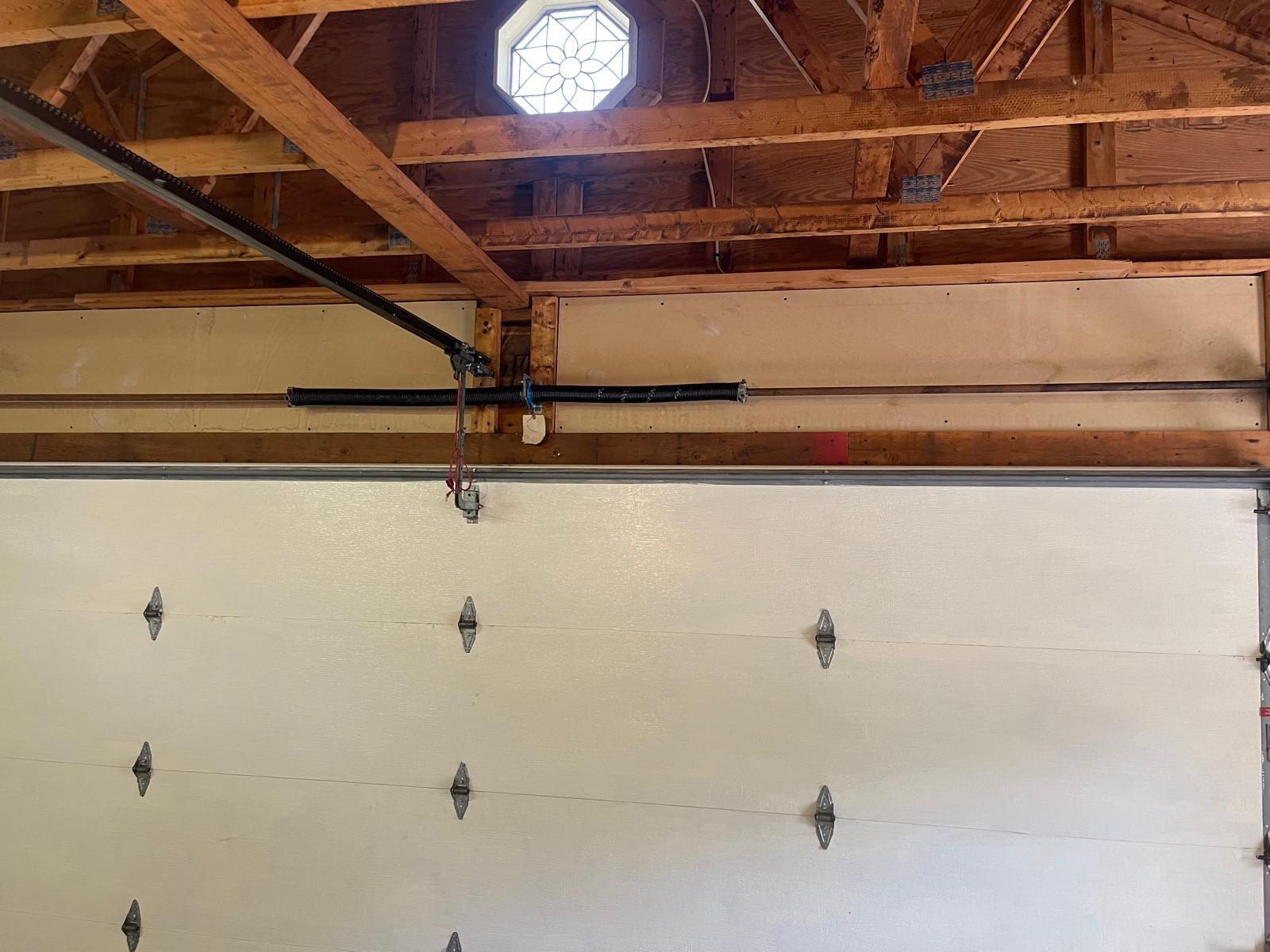
This isn’t just a technical preference—it’s a safety and performance question. Torsion springs mount above the door and are generally safer and more durable. Extension springs run along the sides and can be dangerous if they break because they release stored energy horizontally.
Most modern installations use torsion springs. If a technician recommends extension springs for a new installation, ask why. There are valid reasons in some older Suffolk County homes with specific ceiling configurations, but usually it’s because they’re cheaper and easier to install. We prefer torsion springs in almost every situation because they last longer and the safety profile is better.
What About The Opener?
Not all openers are created equal, and the box store special for $150 isn’t going to cut it for a heavy door. Ask about horsepower ratings and drive types. Belt drives are quieter than chain drives, which matters if you have bedrooms above the garage. DC motors are generally more reliable than AC motors and have better battery backup options.
We’ve seen too many homeowners in places like Smithtown buy an undersized opener because it was on sale, then call us six months later when it can’t lift the door in cold weather. The opener should match the door weight and size, not the clearance rack at the big box store.
The Safety Question Most People Forget
Garage doors are heavy. We’re talking 200 to 400 pounds depending on the material and size. If the safety systems aren’t working properly, that door can cause serious injury or death.
Ask about the auto-reverse mechanism. Every modern door should have photoelectric sensors that detect obstructions and reverse the door. Test them yourself after installation—put a roll of paper towels under the door and see if it reverses on contact. A shocking number of technicians skip this step or don’t adjust the sensors properly.
We had a customer in Port Jefferson whose previous technician disabled the sensors because “they kept getting in the way.” That’s not a fix. That’s a hazard. If a technician suggests bypassing any safety feature, end the conversation immediately.
Experience Matters More Than You Think
How Long Have You Worked In Suffolk County?
There’s a difference between a technician who knows garage doors generally and one who knows garage doors in Suffolk County specifically. The older homes in areas like Stony Brook have different door configurations than the newer construction out east. The salt air near the coast eats at certain metals faster. The frost heave in winter can shift concrete slabs and throw off track alignment.
A local technician has seen these patterns before. They know that the door in that 1960s ranch in Setauket probably has non-standard track dimensions. They know that the springs on a house near the water need extra corrosion protection. That kind of knowledge comes from years of working in the same area, not from a training video.
Can You Give Me References From Similar Jobs?
Any reputable technician should be able to provide references from recent work. Call them. Ask about the quality of the work, whether the job came in on budget, and whether the technician cleaned up afterward. You’d be surprised how many people skip this step and regret it later.
We keep a list of recent installations and repairs we’ve done in Suffolk County. Happy to share them. If a technician can’t or won’t provide references, that’s a sign they either don’t have a track record or don’t want you talking to past customers.
Cost Questions That Reveal The Truth
What’s Included In The Quote?
This is where the cheap quotes fall apart. A low price might cover just the labor and the most basic parts. Then you get charged extra for the trip fee, the disposal of old parts, the adjustment visit that turns out to be “not included.” We’ve seen quotes that looked half the price of competitors but ended up costing more when all the add-ons were factored in.
Ask for a written quote that itemizes everything: parts, labor, trip fee, disposal, tax. If they won’t put it in writing, that’s a problem. We provide written estimates for every job because we want there to be no surprises when the bill comes.
What’s Your Warranty?
Parts warranties vary widely. Some technicians offer a one-year warranty on springs. We offer two years on springs and five years on openers because we use better parts and we stand behind our work. But a warranty is only as good as the company backing it. If the technician disappears in six months, that warranty is worthless.
Ask about labor warranties too. A parts warranty doesn’t help if you have to pay labor for the replacement. We include labor on warranty work for the first year. That’s standard for us, but it’s not standard everywhere.
The Trade-Offs You Need To Understand
New Installation Vs. Repair
Sometimes repairing an old door makes sense. Sometimes it’s throwing good money after bad. We’ve had customers in Commack who spent $800 repairing a 25-year-old door that should have been replaced. Six months later, another spring broke, and the panels were starting to rust anyway.
There’s no one-size-fits-all answer. A good technician will be honest about whether repair or replacement is the better long-term value. If someone pushes you toward a full replacement without explaining why, get a second opinion. If someone insists on repairing a door that’s clearly beyond its useful life, question their motives.
DIY Vs. Professional
We get it. Everyone wants to save money. But garage door repair is one of those things where DIY can be genuinely dangerous. Torsion springs are under extreme tension—thousands of pounds of force. One mistake and you’re looking at a serious injury or worse.
We’ve fixed more DIY disasters than we can count. Springs installed backwards. Cables routed wrong. Safety systems completely disabled because the homeowner didn’t understand how they worked. The money you save doing it yourself gets eaten up fast when you have to pay a professional to fix the mess.
If you’re comfortable with basic maintenance like lubricating moving parts and tightening bolts, go for it. Anything involving springs, cables, or track realignment? Leave it to someone who does this every day.
When Professional Help Is The Only Answer
There are situations where calling a professional isn’t just recommended—it’s necessary. If your door is off its tracks, if you hear grinding or popping sounds during operation, if the springs are visibly damaged or broken, or if the door won’t stay open or closed properly, those are not DIY projects.
We’ve responded to emergency calls in Suffolk County where homeowners tried to fix a broken spring themselves and ended up with the door crashing down on their car. The repair cost more because now there’s vehicle damage too. The time, risk, and cost of doing it wrong far outweigh the price of a professional repair.
What A Good Technician Actually Does
A solid technician doesn’t just fix the immediate problem. They inspect the entire system. They check the tracks for alignment. They test the safety sensors. They lubricate the moving parts. They show you what they found and explain what might need attention in the future.
We spend about 15 minutes on every job just doing a full system inspection, even if the customer only called about a broken spring. Sometimes we find a cable that’s fraying or a roller that’s about to fail. Catching those things early saves the customer money and prevents an emergency call later.
If a technician shows up, fixes the one thing you called about, and leaves without looking at anything else, they’re not doing you any favors. They’re doing the minimum to get paid.
The Bottom Line
Hiring a garage door technician in Suffolk County comes down to a few things: licensing and insurance, quality of parts, local experience, and transparency about costs and warranties. The questions we’ve outlined here aren’t complicated, but they’ll separate the professionals from the people who are just passing through.
Take the time to ask them before you hire. Get everything in writing. Check references. And if something feels off, trust that feeling. There are plenty of good technicians out there—garage door systems are complex enough that you want someone who treats the work with respect.
At Alo Garage Doors, we’ve been doing this in Suffolk County long enough to know what works and what doesn’t. We’ve seen the shortcuts, the cheap parts, and the safety violations that other people leave behind. We don’t do that, and we don’t think you should have to deal with it either. If you’re in Suffolk County and need work done, give us a call. We’ll walk you through what needs to happen and why, no pressure, no games.
Your garage door is one of the largest moving parts in your home. It deserves better than a gamble.