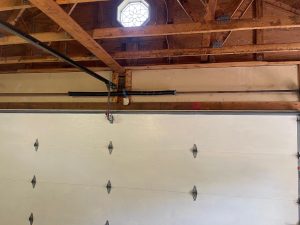

We get it. You walk into your garage, hit the button, and nothing happens. Or maybe the door groans like it’s about to take flight, or it slams down harder than it should. Your first instinct is probably to panic, call someone, or start poking around with a screwdriver. We’ve seen that play out more times than we can count, and honestly, sometimes that screwdriver makes things worse.
In our years working with homeowners across Long Island, we’ve noticed that most garage door issues fall into a handful of predictable categories. The tricky part is that the symptoms can look the same even when the root cause is completely different. A door that won’t open could be a snapped spring, a dead motor, or something as simple as a misaligned safety sensor. The difference between a five-minute fix and a full replacement comes down to knowing what you’re actually dealing with.
Let’s walk through the most frequent problems we see, what they actually mean, and when you should step away from the toolbox and call in a professional.
Key Takeaways
- Most garage door problems stem from springs, cables, rollers, or opener issues.
- A loud or jerky door usually points to worn hardware, not a motor problem.
- Safety sensors are a common culprit for doors that reverse or stop mid-cycle.
- DIY repairs on springs and cables are dangerous and often void warranties.
- Regular maintenance can catch small issues before they become expensive emergencies.
The Spring That Snaps When You Least Expect It
Torsion springs are the workhorses of your garage door. They counterbalance the weight so the opener doesn’t have to lift a few hundred pounds on its own. When a spring breaks, you’ll hear it. It sounds like a gunshot or a loud bang, and it usually happens at the worst possible time—right when you’re leaving for work or coming home late.
We’ve had calls from homeowners in Nassau County who thought someone had fired a gun in their neighborhood. It’s that startling. After the shock wears off, you’ll notice the door is either impossible to lift manually or it slams down with alarming force. That’s because the spring is no longer doing its job.
Here’s the thing: springs have a finite lifespan. Most are rated for around 10,000 cycles. If you open and close your door four times a day, that’s about seven years. Long Island’s humidity and salt air can accelerate corrosion, so we often see failures closer to five or six years in coastal areas like Freeport or Long Beach.
Do not attempt to replace a torsion spring yourself. We mean that. The tension stored in those coils can snap a wrist or worse. We’ve seen the aftermath of DIY spring jobs, and it’s not pretty. Call a professional. It’s one of those repairs where the cost of hiring someone is far less than the cost of a trip to the ER.
Cables That Fray or Come Off Track
The cables run alongside the springs and connect to the bottom brackets on each side of the door. They’re under constant tension, and over time, they can fray, snap, or slip off the drum. When a cable fails, the door will usually hang crooked, with one side higher than the other. It might also refuse to move at all.
We’ve seen homeowners try to fix this by pulling the cable back into place with pliers. That’s a bad idea. The cable is under high tension, and if it slips, it can whip around and cause serious injury. Plus, if the cable came off because the spring broke or the drum shifted, just putting it back won’t solve the problem.
A common scenario we encounter in older homes in Suffolk County is that the cables have simply worn out from years of use. The steel strands start to look like a frayed rope. That’s a clear sign it’s time for a replacement. Ignoring it means you’re one cycle away from a complete failure.
Rollers That Grind and Squeal
Rollers are the small wheels that ride in the tracks on either side of the door. They seem insignificant, but when they start to fail, the whole door operation changes. You’ll hear a grinding or squealing sound, and the door might move jerkily or bind up in certain spots.
Most residential doors use nylon or steel rollers. Nylon ones are quieter but can crack in cold weather. Steel ones last longer but are noisier. We’ve replaced countless sets in homes near the water where salt air corrodes the bearings. If your door sounds like a haunted house prop, it’s probably the rollers.
The fix is straightforward: lubricate the rollers with a silicone-based spray every six months. But if they’re already worn out, lubrication won’t help. You’ll need to replace them. This is a job many handy homeowners can do themselves, but pay attention to the type of roller. Some require removing the hinges, which can be tricky if the door isn’t properly supported.
The Opener That Refuses to Cooperate
Sometimes the door itself is fine, but the opener is the problem. We’ve seen openers that hum but don’t move, openers that stop halfway, and openers that reverse for no apparent reason. The most common culprit is the safety sensor system.
Those small sensors near the floor on each side of the door are designed to prevent the door from closing on a person or object. If they’re misaligned, dirty, or blocked, the opener will refuse to close. It might also reverse immediately after starting to close. We’ve had customers call us in a panic because their door wouldn’t close, only to find a spider web or a leaf blocking one sensor.
Another frequent issue is the travel limits. Over time, the settings that tell the opener where the door should stop can drift. If your door doesn’t close all the way or reverses when it hits the floor, the limit settings probably need adjustment. Most openers have small screws or buttons for this. It’s a simple fix, but you need to be careful not to overcorrect.
If the opener hums but doesn’t move, the internal gears might be stripped. This is common in older chain-drive openers. At that point, you’re usually better off replacing the whole unit rather than trying to rebuild it.
Tracks That Look Straight But Aren’t
The tracks guide the door as it opens and closes. If they’re bent, twisted, or misaligned, the door will struggle. You might see the rollers pop out, or the door might rub against the track and scrape paint off.
We’ve seen tracks damaged by someone backing into them with a car, or by a door that slammed down hard because a spring broke. In older homes in Garden City or Manhasset, we sometimes find tracks that were never installed perfectly in the first place. Over decades, the brackets loosen, and the tracks shift.
Straightening a track is possible, but it requires precision. If you hit a track with a hammer without understanding the geometry, you can make it worse. A professional will use a level and a rubber mallet to tweak it back into position. If the track is badly kinked, replacement is the only option.
Weather Stripping That Lets Everything In
This one isn’t a mechanical failure, but it’s a problem we hear about constantly. The rubber seal along the bottom of the door, or the weatherstripping on the sides, dries out and cracks over time. On Long Island, the combination of sun, salt air, and freeze-thaw cycles is brutal on rubber.
When that seal fails, you get drafts, water intrusion, and pests. Mice and insects love a gap under the garage door. We’ve pulled out nests, leaves, and even the occasional squirrel that found its way in. Replacing weather stripping is a DIY-friendly job, but you need to measure carefully and buy the right profile. There are different shapes for different door types.
When the Door Goes Off Track
A door that comes off the track is a serious problem. It usually happens when a roller breaks or pops out, and the door then falls sideways. You’ll see the door hanging at an angle, and trying to move it will only make things worse.
We’ve had customers try to force the door back onto the track by lifting it. That can cause the cables to snap or the door to fall entirely. If your door comes off track, stop. Don’t touch it. Call someone. This is a repair that requires releasing the tension in the springs and carefully guiding the door back into place. It’s not a beginner job.
The Noise Factor
Not every problem is about function. Sometimes the door works perfectly but sounds like a construction site. That noise is usually a combination of worn rollers, dry hinges, and loose hardware. We’ve been in garages where the noise was so loud you could hear it from the street.
The fix is often simple: tighten every bolt and screw on the door, then lubricate all moving parts. But if the noise persists, it might be a sign that the door is out of balance. An unbalanced door puts extra strain on the opener and the springs. You can test this by disconnecting the opener and lifting the door manually. It should lift smoothly and stay open about halfway. If it falls or feels heavy, the springs need adjustment.
Comparing Repair vs. Replacement
Sometimes the decision isn’t about fixing one part. It’s about whether the whole system is worth saving. Here’s a table that breaks down the trade-offs based on what we’ve seen in the field:
| Situation | Likely Repair Cost | Likely Replacement Cost | When to Replace |
|---|---|---|---|
| Broken spring | $150–$300 | $800–$1,500 (new door + opener) | If door is over 15 years old or has rust damage |
| Frayed cables | $100–$200 | Same as above | If door is warped or panels are damaged |
| Worn rollers | $50–$150 | Same as above | If tracks are also worn or door is over 20 years |
| Opener failure | $100–$400 (repair) | $400–$800 (new opener) | If opener is over 10 years old or noisy |
| Off-track door | $150–$400 | Same as above | If tracks are bent or door is structurally weak |
We’ve seen people pour money into a 25-year-old door that was never going to work well again. Sometimes a full replacement is the cheaper option in the long run, especially if you factor in energy savings from better insulation and modern safety features.
A Note on Long Island’s Specific Challenges
Living on an island comes with its own set of problems for garage doors. The humidity and salt air cause rust faster than in inland areas. We’ve replaced hardware on doors that were only five years old because the corrosion was so bad. If you live within a few miles of the coast, consider upgrading to stainless steel or galvanized components.
Another local factor is the freeze-thaw cycle. Water gets into the tracks and freezes, causing the door to stick. We’ve had calls in January from homeowners in Huntington whose doors were frozen shut. The solution is to keep the tracks dry and apply a silicone lubricant before the first freeze. Also, check the weather stripping in the fall. A good seal keeps moisture out.
When Professional Help Is the Only Option
We’re not saying you can’t do any maintenance yourself. Lubricating rollers, tightening bolts, and replacing weather stripping are all reasonable DIY tasks. But there are lines you shouldn’t cross. Springs, cables, and track realignment are where we draw the line. The risk of injury is real, and the cost of a mistake can be higher than the cost of a service call.
If you’re in doubt, call Alo Garage Doors located in Long Island. We’ve seen every problem you can imagine, and we’ve fixed them in every kind of weather. Sometimes the smartest move is to let someone who does this every day handle it. It saves you time, risk, and often money in the long run.
Final Thoughts
Garage door problems are frustrating, but they’re rarely a mystery. Most of the time, the issue is mechanical wear, environmental damage, or a simple misadjustment. The key is to diagnose it correctly before you start turning wrenches. Listen to your door. Pay attention to how it moves. And don’t ignore the small signs, because they usually lead to bigger problems.
We’ve been in this industry long enough to know that a little preventive care goes a long way. A few minutes of lubrication and inspection twice a year can add years to your door’s life. And when something does go wrong, you’ll know whether it’s a quick fix or a call to a professional.
At the end of the day, your garage door is one of the most-used entry points to your home. It deserves a little attention. Treat it well, and it’ll return the favor.