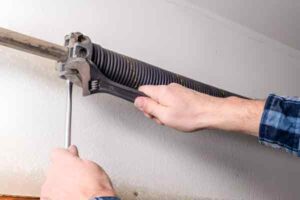

We’ve all been there. You press the remote, hear that familiar hum, and then nothing happens. Or worse, you hear a loud bang from the garage and find a metal coil lying on the floor like a dead snake. That’s the moment you realize you’re dealing with a broken spring, and suddenly, you’re deep in a decision you never planned to make: torsion spring or extension spring? Which one do you have, which one do you need, and can you actually fix it yourself without losing a finger?
The short answer is that torsion springs are mounted above the garage door opening and twist to lift the door, while extension springs run along the horizontal tracks and stretch to do the same job. But the real difference comes down to safety, longevity, cost, and how much headache you’re willing to tolerate. If you’re here because a spring snapped, here’s what you need to know right now: do not try to replace it yourself unless you have the proper winding bars, a solid understanding of stored energy, and a healthy respect for physics. We’ve seen too many people walk into emergency rooms because they thought they could save a few hundred bucks.
Key Takeaways
- Torsion springs are safer, last longer, and provide smoother operation than extension springs, but they cost more to install.
- Extension springs are cheaper upfront but require more maintenance and pose a higher risk of injury if they break.
- Professional installation is strongly recommended for torsion springs due to the high tension involved.
- Regular lubrication and visual inspections can extend the life of either system by a year or two.
- Local climate matters—Long Island’s humidity and salt air can accelerate corrosion on both types.
The Core Difference Between Torsion and Extension Springs
Let’s get the technical stuff out of the way quickly. A torsion spring system uses one or two tightly wound coils mounted on a metal shaft above the door header. When the door closes, the spring twists, storing mechanical energy. When you open the door, that stored energy releases to counterbalance the weight. It’s a clean, compact system that keeps the hardware out of the way.
Extension springs, on the other hand, are mounted on both sides of the door, running parallel to the horizontal tracks. They stretch when the door closes and contract when it opens. They rely on a system of cables and pulleys to multiply the force. If you’ve ever seen a garage door with springs that look like they’re about to snap and whip across the room, that’s an extension setup.
In our experience, most homeowners don’t care about the engineering until something breaks. But knowing the difference helps you understand why one system might fail sooner, why one is louder, and why one is more likely to send a piece of metal through your drywall.
Why Torsion Springs Are Almost Always the Better Choice
If you’re building a new garage or replacing an entire door system, we’d recommend torsion springs every time. Here’s why.
Safety and Reliability
Torsion springs are enclosed on a shaft and don’t have the same whipping action when they break. When a torsion spring snaps, it usually loses tension instantly and the door drops. It’s startling, but the spring itself stays in place. Extension springs, by contrast, can break and become projectiles. We’ve walked into garages where an extension spring punched a hole in the ceiling drywall or shattered a window. That’s not an exaggeration.
Longevity and Cycle Life
A quality torsion spring typically lasts 10,000 to 15,000 cycles. That’s about 7 to 10 years for an average household using the door twice a day. Extension springs usually last 5,000 to 10,000 cycles. The difference comes down to how the springs are wound and the materials used. Torsion springs are made from thicker wire and experience less fatigue over time.
Smoother Operation
Because torsion springs apply force evenly across the door via the shaft, the door opens and closes more smoothly. Extension springs can cause the door to jerk or wobble, especially if one side stretches faster than the other. That uneven tension also wears out the cables and pulleys faster.
When Extension Springs Still Make Sense
We’re not here to trash extension springs entirely. They’ve been around for decades, and they’re still installed in many homes today. Here’s where they hold their ground.
Lower Initial Cost
If you’re on a tight budget, extension springs are significantly cheaper. A basic set of extension springs costs around $30 to $60, while a torsion spring set runs $50 to $100. The labor difference is even bigger. Installing extension springs is simpler and faster, so a handyman or DIYer can often do it without specialized tools. Torsion spring replacement requires winding bars and a good understanding of tension, which usually means hiring a pro. On Long Island, where labor rates can run $150 to $250 for a spring replacement, that difference adds up.
Easier DIY Replacement
We’ve had customers who replaced extension springs themselves in under an hour. The process is straightforward: release the tension, unhook the old spring, hook up the new one, and test the balance. No winding bars, no high-tension calculations. That said, we still recommend using safety cables—those steel cables that run through the center of the spring to prevent it from flying if it breaks. Many older homes in places like Nassau County or Suffolk County don’t have them, and that’s a cheap upgrade that can prevent a serious injury.
Common Mistakes We See All the Time
After years of working on garage doors across Long Island—from the older colonial homes in Garden City to the newer builds in Stony Brook—we’ve noticed a few patterns. Here are the mistakes that keep coming up.
Buying the Wrong Size Spring
Garage door springs are rated by wire gauge, inside diameter, and length. If you just walk into a hardware store and grab a spring that looks close, you’re gambling. A spring that’s too weak won’t lift the door properly. One that’s too strong puts stress on the opener and the door panels. We’ve seen doors that slam shut because the spring was overpowered, and we’ve seen openers burn out because the spring was undersized.
Forgetting to Lubricate
This one seems simple, but it’s amazing how many people ignore it. Garage door springs need lubrication every six months. Use a silicone-based spray or white lithium grease. WD-40 is not a lubricant—it’s a solvent. We’ve had customers spray WD-40 on their springs and wonder why they squeaked worse a week later. A quick spray on the torsion spring coils and the bearing plates can add a year or two to the spring’s life.
Ignoring the Cables
With extension springs, the cables and pulleys take a beating. We’ve seen cables fray and snap because someone replaced the springs but left the old cables in place. Always replace the cables when you replace extension springs. It’s an extra $10 and ten minutes of work. Skipping it is like changing your oil filter but leaving the old oil in.
Cost Considerations and Trade-Offs
Let’s talk money. A professional torsion spring replacement on Long Island typically runs between $200 and $350, including parts and labor. Extension spring replacement is usually $150 to $250. If you DIY, you’re looking at $40 to $100 in parts, but you’re taking on the risk.
Here’s a quick comparison table to help you decide:
| Aspect | Torsion Springs | Extension Springs |
|---|---|---|
| Typical lifespan | 10,000–15,000 cycles | 5,000–10,000 cycles |
| Safety after break | Stays in place | Can become projectile |
| Installation difficulty | High (requires winding bars) | Low to moderate |
| Professional cost (parts + labor) | $200–$350 | $150–$250 |
| DIY cost (parts only) | $50–$100 | $30–$60 |
| Smoothness of operation | Very smooth | Can be jerky |
| Common in newer homes | Yes | Less common |
| Requires safety cables | No (inherently safer) | Yes (highly recommended) |
The trade-off is clear: torsion springs cost more upfront but offer better safety, longevity, and performance. Extension springs are cheaper and easier to install but come with more maintenance and risk.
When Professional Help Is the Only Smart Move
We’re all for DIY when it makes sense. Changing a light fixture, painting a room, even replacing a garage door opener—those are doable. But garage door springs are different. A torsion spring under tension stores enough energy to break bones. We’ve seen the aftermath of a DIY gone wrong: a guy in Huntington tried to wind a torsion spring with a screwdriver and a pair of pliers. The spring slipped, the bar flew across the garage, and he ended up with a fractured wrist and a $500 ER bill.
If you’re in any of these situations, call a professional:
- You don’t have winding bars (never use screwdrivers or chisels).
- The door is stuck partially open or closed.
- You see visible rust or corrosion on the spring or shaft.
- The door feels heavy or drops quickly when you try to lift it manually.
- You’re unsure which spring size you need.
A local company like garage door specialists can handle it quickly. For homeowners on Long Island, Alo Garage Doors has seen it all—from the salt air corrosion near the South Shore to the older homes in the North Shore villages where springs haven’t been replaced in 20 years. They can assess the whole system, not just the spring, and catch issues like worn rollers or misaligned tracks before they become bigger problems.
Alternatives to Spring Replacement
Sometimes a broken spring isn’t the end of the story. If your door is old, the panels are dented, or the opener is failing, replacing just the spring might be a band-aid. Consider these alternatives:
Full Door Replacement
If your door is more than 15 years old and the springs have failed, it might be time to replace the entire door. Newer doors come with better insulation, modern safety features, and torsion springs as standard. On Long Island, where energy costs are high, an insulated steel door can make a noticeable difference in your garage’s temperature.
Opener Upgrade
Sometimes the spring breaks because the opener is out of adjustment or failing. A new opener with force-sensing technology can prevent future spring damage by stopping the door if it encounters resistance. We’ve seen openers that were so out of adjustment they were essentially fighting the springs every cycle.
Conversion from Extension to Torsion
If you have an older home with extension springs and you’re tired of the noise and risk, you can convert to a torsion system. It’s not a cheap project—expect to pay $400 to $700 for the conversion—but it’s a permanent upgrade that improves safety and performance. Many homeowners in older Long Island neighborhoods, like those near Jones Beach or in the historic districts of Port Jefferson, have made this switch.
Real-World Constraints You Should Know
Not every garage is a perfect candidate for torsion springs. If your garage has low headroom (less than 12 inches between the top of the door and the ceiling), torsion springs may not fit. In those cases, extension springs or a specialized low-headroom torsion kit are the options. We’ve worked on garages in the older parts of Hempstead where the ceiling is barely 10 feet high, and the only solution was a custom extension spring setup.
Also, if you live in a coastal area like Long Beach or Fire Island, salt air will corrode springs faster. Stainless steel torsion springs are available, but they cost about twice as much. Regular lubrication and annual inspections become critical in those environments. We’ve seen standard springs rust through in under five years near the shore.
Final Thoughts
Choosing between torsion and extension springs isn’t just about price. It’s about how much risk you’re willing to carry, how often you want to think about your garage door, and what kind of performance you expect. Torsion springs are the modern standard for good reason. They’re safer, smoother, and last longer. Extension springs still have a place, especially in budget-conscious or low-headroom situations, but they demand more attention.
If your spring just broke, take a breath. Don’t rush to the hardware store. Measure the door height, check the spring type, and decide whether this is a DIY job or a call to a pro. For most people, especially in a place like Long Island where weather and salt air add stress to the system, hiring a professional is the smarter, safer move. Alo Garage Doors has been handling these repairs across the island for years, and they know exactly what works in this climate.
The goal isn’t just to fix the spring. It’s to make sure the door works reliably for the next five to ten years without another surprise. That peace of mind is worth more than the few hundred dollars you might save by going it alone.