You’re standing in your driveway, staring at a garage door that just made a sound you’ve never heard before. Maybe it was a grinding halt halfway up, or a sudden refusal to close all the way. The immediate question hits: do I fix this thing, or do I finally bite the bullet and replace it?
It’s not a simple yes or no. And if you ask a contractor, a salesman, or your neighbor who just installed a new door, you’ll get three different answers. After years of walking into garages across Long Island—from the older colonials in Nassau County to the newer builds out east—we’ve seen the same patterns play out. Some repairs are a waste of money. Some replacements are unnecessary. Here’s how to tell the difference without getting burned.
Key Takeaways
- Age and condition of the door matter more than the specific broken part.
- Springs and cables fail predictably; panels and openers fail with more nuance.
- Replacing a single panel often costs more than it’s worth.
- A professional opinion can save you from buying a new door you don’t need.
The Real Cost of Waiting
Most homeowners don’t call us until the door is completely dead. That’s understandable—life gets busy, and a door that “mostly works” is easy to ignore. But here’s what we see repeatedly: a small problem left alone turns into a much bigger one. A slightly off-track roller chews through the track over weeks. A noisy opener that sounds like a coffee grinder is usually a gear set that’s about to strip completely.
We’ve had customers who ignored a slow-moving door for six months, only to have a spring snap during a snowstorm. That one repair could have been a simple lubrication and adjustment. Instead, they ended up with a broken spring, a damaged cable, and a door that needed to be manually lifted—not fun when it’s 20 degrees outside.
The real cost isn’t just the repair bill. It’s the inconvenience, the emergency call-out fees, and the stress of being stuck. If your door is showing signs of trouble, it’s worth having someone look at it sooner rather than later. Most issues don’t fix themselves.
Springs: The Most Common Failure Point
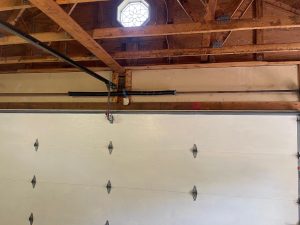
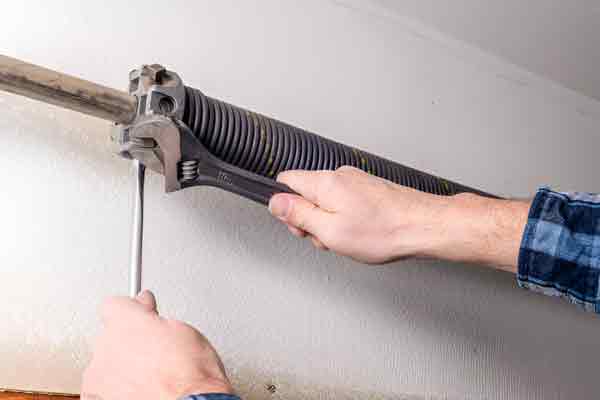
Torsion springs are the workhorses of any garage door. They lift the weight so your opener doesn’t have to. They also have a finite lifespan—usually measured in cycles, not years. A standard spring might last 10,000 cycles. That sounds like a lot until you realize every time you open and close the door, that’s one cycle. For a family of four, that’s easily 10 to 15 cycles a day. Do the math: that spring is probably dead in two to three years.
When a spring breaks, you’ll hear it. It sounds like a gunshot or a loud bang. The door will either slam shut or refuse to open. At that point, you have a choice: replace the broken spring, or replace the whole door.
Our advice: if the door is less than 10 years old and in good shape, just replace the springs. It’s a straightforward repair, and it buys you years of reliable service. If the door is older, has rust, or the panels are starting to bow, replace the whole unit. Springs are relatively cheap—a few hundred dollars—but putting new springs on a worn-out door is like putting new tires on a car with a blown engine. It works, but it doesn’t fix the underlying problem.
One thing to watch out for: cheap springs. We’ve seen doors with springs that snapped after six months because the manufacturer used low-grade steel. If you’re replacing springs, ask for high-cycle springs rated for 20,000 cycles or more. The upfront cost is a bit higher, but you’ll likely never deal with them again.
Panels: When One Bad Section Ruins the Whole Door
A dented panel is the most common reason people call us wanting a replacement. And honestly, it’s usually the right call. Here’s why: replacing a single panel is rarely as simple as it sounds.
First, you have to find a matching panel. Manufacturers change designs every few years. Even if you know the brand, the exact color and raised-panel pattern might not exist anymore. We’ve spent hours on the phone tracking down discontinued panels, and half the time, the customer ends up with a door that looks mismatched anyway.
Second, the cost. A single panel can run $200 to $400, plus labor. For that price, you’re more than halfway to a brand-new door. And a new door comes with new springs, new hardware, and a warranty. The old door still has old springs and old tracks. You’re essentially patching a system that’s already worn.
There are exceptions. If the door is less than five years old and the damage is minor—a small dent from a basketball, for example—replacing the panel makes sense. But if the door is older, or the damage is structural (like a panel that’s bent from backing into it), replace the whole thing. You’ll be happier in the long run.
Openers: The Brain That Usually Doesn’t Die
Garage door openers are surprisingly durable. Most last 10 to 15 years with basic maintenance. The common failure points are the motor capacitors, the gear train, and the safety sensors. A dead opener doesn’t always mean you need a new door.
If your opener is making grinding noises or struggling to lift the door, check the springs first. Nine times out of ten, the opener isn’t the problem—the springs are worn and the opener is working overtime. We’ve had customers replace openers twice before realizing the springs were shot. That’s a painful lesson.
If the opener itself is actually dead, you have a decision. Modern openers are quieter, have better safety features, and often include battery backup. If your current opener is more than 10 years old, replacing it is usually worth it. You’ll get a quieter operation and better reliability. If the opener is relatively new, a repair is fine.
One thing to consider: if you have a belt-drive opener and it fails, it’s often worth repairing. Belt drives are quieter and more reliable than chain drives. Chain drives are cheaper but louder and require more maintenance. If you’re in a neighborhood where noise matters—like a tight Long Island subdivision where your garage is right next to a bedroom—spend the extra on a belt-drive replacement.
Tracks and Rollers: The Silent Killers
Tracks and rollers don’t get much attention, but they’re critical. A bent track or a worn roller causes the door to bind, which puts stress on the opener and the springs. Over time, that binding can warp the panels and ruin the door.
We see this a lot in older homes with wood-framed garages. The foundation settles, the track gets slightly out of alignment, and suddenly the door is scraping against the frame. Most of the time, we can adjust the track and replace the rollers for a few hundred dollars. That fixes the problem without touching the door itself.
But if the track is rusted or the rollers are completely shot, it’s a different story. Rusted tracks can’t be adjusted properly, and replacing them is labor-intensive. At that point, you’re looking at a significant repair bill. If the door is also older, it’s usually better to replace the whole system.
A quick test: open the door manually. If it moves smoothly with minimal effort, the tracks and rollers are fine. If it jerks, binds, or makes scraping sounds, something is off. Don’t ignore it.
Weather and Climate: The Long Island Factor
Living on Long Island means dealing with humidity, salt air, and temperature swings. That combination is brutal on garage doors. Wood doors swell and contract. Steel doors rust if the paint chips. Springs corrode faster near the coast.
We’ve worked on doors in Massapequa that looked ten years older than they were because of the salt air. In those cases, replacing the door with a galvanized steel or aluminum model is almost always the better choice. You’ll pay a bit more upfront, but you won’t be repainting or repairing rust every few years.
If you live closer to the South Shore, where the air is saltier, consider a door with a baked-on enamel finish. It holds up better than standard paint. And if you’re in a flood zone, look for doors with weather seals that actually seal. We’ve seen plenty of garages that flood because the bottom seal was cracked or missing. That’s a cheap fix that saves thousands in water damage.
Cost Comparison: Repair vs. Replace
Here’s a rough breakdown of what you’re looking at. Prices vary by door type and labor rates, but this gives you a ballpark.
| Issue | Repair Cost | Replacement Cost | When to Replace |
|---|---|---|---|
| Broken spring | $150–$300 | $800–$2,500+ | Door over 15 years old or panels damaged |
| Dented panel | $200–$400 | $800–$2,500+ | Door over 10 years old or mismatch risk |
| Dead opener | $150–$300 | $400–$800 | Opener over 10 years old |
| Bent track | $100–$250 | $800–$2,500+ | Track rusted or door old |
| Rust/corrosion | $100–$500 (paint/seal) | $800–$2,500+ | Extensive rust or structural damage |
The numbers don’t lie. If you’re spending more than half the cost of a new door on a repair, it’s time to replace. But if the repair is under $300 and the door is in good shape, fix it. You’re not throwing money away—you’re extending the life of a functional system.
When Professional Help Is Non-Negotiable
Some things you can handle yourself. Lubricating hinges, tightening bolts, cleaning tracks—these are DIY-friendly. But springs are dangerous. Torsion springs are under extreme tension. If you don’t know what you’re doing, you can seriously injure yourself. We’ve seen the aftermath of DIY spring replacements. It’s not pretty.
Similarly, replacing a garage door opener involves electrical work and alignment. If you’re comfortable with a multimeter and basic wiring, go for it. If not, call a pro. The time you save and the risk you avoid are worth the cost.
For Long Island homeowners, we always recommend getting a professional inspection before making a decision. A good technician can tell you exactly what’s wrong and whether a repair makes sense. Garage door systems are more complex than they look, and a misdiagnosis can cost you.
The Bottom Line
The decision to repair or replace comes down to three things: age, condition, and cost. If your door is under 10 years old, in good shape, and the repair is under $300, fix it. If the door is older, the panels are damaged, or the repair cost is more than half of a new door, replace it.
Don’t let a salesman talk you into a new door you don’t need. And don’t let a handyman talk you into a repair that’s just a band-aid. Get a second opinion if you’re unsure. Most reputable companies will give you an honest assessment.
At the end of the day, a garage door is a mechanical system. It wears out. But with the right call, you can get years of reliable service without overspending. If you’re in Long Island and need a straight answer, Alo Garage Doors has been doing this long enough to know when to fix and when to fold. Give us a call, and we’ll walk you through it.